


Brain Who? Tricky Riddle Tests
Teos Oyun
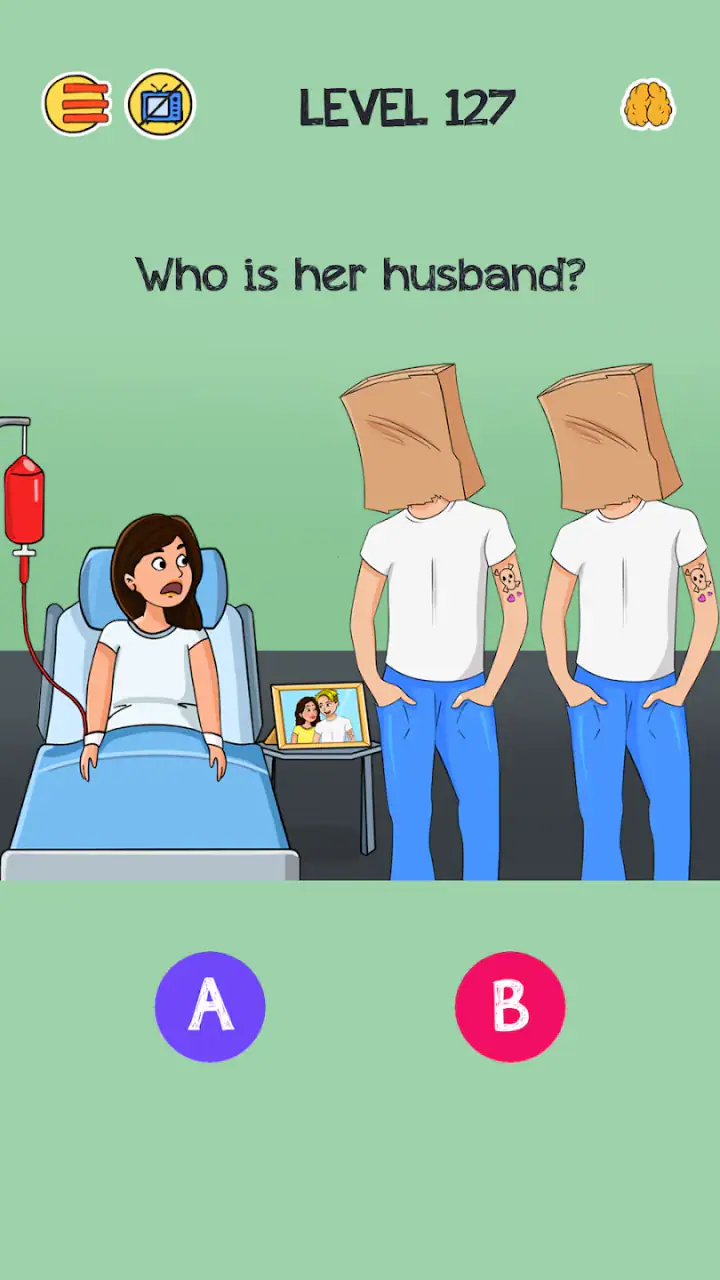
I first tried Brain Who? Tricky Riddle Tests as a quick solo word game, but it became more interesting when I left it on a shared device at home. One person could read a puzzle aloud, another could suggest a suspect, and a third could point out the detail everyone had missed. That simple handoff suits the game well: its logic riddles are short enough for casual turns, yet often designed to make you question your first answer.
This is a free word game from Teos Oyun, built around identifying who is responsible in a series of visual or written mystery-style challenges. Its store summary describes the basic idea as finding who did it, but the practical appeal is broader: it gives you small reasoning problems that can fill a spare minute without requiring a long campaign, a complicated control scheme, or a large commitment. I found it especially easy to pass around because the main activity is thinking and discussing rather than mastering fast touch controls.
The game has a 4.8 average from around two million ratings and has passed 50 million installs, which makes its popularity understandable. Still, those figures do not tell you whether it fits your household. The more useful question is whether you enjoy trick questions, whether you are comfortable sharing a screen, and whether you want a game that rewards careful observation more than conventional vocabulary skill.
How Brain Who? works when more than one person is using the device
The best shared-use scenario is an informal one. Imagine waiting for food, sitting in a living room, or taking a short break when someone opens a puzzle and reads the situation aloud. Rather than treating the phone as a private game board, you can use it as a prompt for a small group conversation. I liked that each person could form a theory before the answer was revealed, because the wrong answers often led to more discussion than the correct one.
That format also exposes one of the game’s central strengths: it is easy to explain. You do not need to teach a control layout or describe a complicated objective. The player examines the scene or wording, looks for a clue, and chooses an answer. For a household with different gaming habits, that low barrier matters. Someone who never plays action games can still participate immediately, while a regular puzzle fan can take the lead when the clues become less obvious.
Related News

Why WhatsApp Messenger Still Makes Everyday Communication Feel Easy

Jurassic World: The Game Is the Better Dino Tycoon for Strategic Players

Threads in Real Life: Who Should Join, Lurk, or Leave

How SHEIN Turned Shopping Into an Endless Content Feed

How to Make Fortnite Feel Smarter on Mobile

Should You Switch to Microsoft Outlook on Mobile?
There is a trade-off, though. A shared device works best when everyone accepts that the active player may tap, swipe, or inspect the screen before the others have finished thinking. If one person rushes through every puzzle, the group experience becomes more like watching than solving. I recommend agreeing on a small routine: read the prompt, give everyone a few seconds, invite one explanation from each person, and only then submit an answer. That turns a basic mobile game into a much better social puzzle session.
For solo play, the same structure becomes a compact mental break. I could play a few riddles without needing headphones, a long uninterrupted session, or a separate account. The puzzles encourage attention to wording and context, so I found them more satisfying when I resisted the urge to tap randomly. When an answer seemed obvious, checking the scene again was often the better move.
What to settle before sharing the phone
Because the game is free to download, it is tempting to hand it to a child or guest without thinking about the rest of the session. I would still establish a simple boundary before doing that. Decide who is allowed to make purchases, whether the device owner wants progress left untouched, and whether the player should ask before moving to the next puzzle. These are household agreements rather than special game functions, but they prevent avoidable arguments.
Gallery
The game includes in-app purchases ranging from $2.49 to $7.99 per item. That makes purchase awareness important on a shared phone or tablet. I would not let a younger player explore the game alone on an unlocked payment setup, even though the title itself is marked Everyone. The age label describes the content context; it should not replace ordinary supervision around spending or device access.
Another useful boundary is deciding whether the current player is solving or simply browsing. A person who wants to preserve the challenge should avoid giving away answers while someone else is playing. On a shared screen, this can be harder than it sounds because the puzzle is visible to everyone. If your household has one person who enjoys solving and another who immediately searches for the trick, taking turns with a clear “no hints until asked” rule makes the experience fairer.
I also suggest treating the game as a shared activity rather than assuming that every family member will enjoy it equally. Its puzzles are based on logic riddles and suspicious situations, not on building a character, collecting resources, or competing in a multiplayer match. That means it can bring people together for discussion, but it will not satisfy someone looking for progression, strategy depth, or a strong sense of personal achievement.
Coordinating turns without losing the puzzle
On a household device, coordination is more valuable than speed. A practical method is to give the phone to one person for a small batch of riddles, then rotate. The active player can control the screen while everyone else acts as the reasoning team. This avoids the awkward situation where several hands reach for the same device and also gives quieter players room to explain their thinking.
A second method is to separate observation from tapping. Let one person describe what they see, let another propose the theory, and let a third make the final selection. This is particularly useful when a puzzle depends on a small visual detail. It slows the session slightly, but the delay is productive: people notice why an answer works instead of treating the game as a sequence of guesses.
There is also a learning benefit in asking for reasons rather than just answers. If a player says, “It is that person,” ask which clue supports the conclusion. That habit helps reveal whether the puzzle was solved through logic, lucky guessing, or recognition of a familiar trick. I found this especially helpful with younger players, because it turns a quick riddle into a short exercise in explaining evidence.
At the same time, I would not force a group format on every session. Some puzzles are more enjoyable alone when you can inspect them at your own pace. A child may want to solve independently, while an adult may prefer a quick break without commentary. The game works in both modes, but the household should treat solo time and shared time as different uses rather than expecting one arrangement to suit everyone.
Age suitability, trust, and the limits of the Everyone label
Brain Who? is rated Everyone, and its word-and-riddle format is much more approachable than a game built around combat, frightening imagery, or complex social interaction. I would consider it a reasonable choice for mixed-age use when an adult is nearby and the device rules are already clear. The main challenge is not physical skill; it is understanding the wording, noticing clues, and accepting that a seemingly simple situation may contain a trick.
That does not mean every puzzle will feel equally suitable for every child. Younger players may need help reading the prompt or understanding why an answer depends on a detail they overlooked. Older children may enjoy arguing about the logic, while some may become frustrated if they feel the intended solution is too dependent on a wordplay twist. I found that a calm explanation works better than immediately revealing the answer, because the reasoning is where most of the value lies.
Trust matters on a shared device in another way: progress and access should be handled openly. If several people use the same phone, agree on whether everyone is continuing one session or whether each person gets separate turns without expecting individual tracking. I would not assume that a shared device automatically provides distinct household profiles or separate boundaries. The safest approach is to keep the arrangement simple and make the owner responsible for deciding what may be changed.
The content rating also should not be confused with a promise that the game will suit every personality. A child who dislikes trick questions may find the experience irritating, even if the subject matter is harmless. Someone who prefers direct, clearly stated rules may be happier with a traditional crossword or a structured word puzzle. In contrast, players who enjoy being misled briefly and then spotting the hidden clue are likely to get more from this title.
Where it stands beside familiar word-game alternatives
Compared with a crossword, this game asks for less sustained vocabulary knowledge and more situational reasoning. You are not filling a grid from a set of definitions; you are interpreting a small mystery and deciding which detail matters. That makes it easier to start casually, but it may feel less rewarding to someone who enjoys building a long-term record of language skill.
Compared with a classic anagram or spelling game, it is less about producing words under pressure. There is no need to search for the highest-scoring combination or race a clock simply to keep up. The benefit is that it works well for conversation and mixed abilities. The limitation is that players looking for a repeatable competitive system may find the experience comparatively light.
It also differs from a full detective adventure. The riddles provide brief cases rather than a large world with characters, inventory, or a continuing investigation. I appreciated the quick format when I wanted a mental snack, but I would choose a narrative mystery game for a deeper sense of discovery. Brain Who? is better at delivering a succession of small “look again” moments than at creating a sustained story.
One non-obvious strength is how suitable the format is for explanation. Many mobile games become less enjoyable when one person watches another play, but these puzzles can be discussed without the spectator feeling completely excluded. One non-obvious weakness is that group enjoyment depends heavily on pacing: if the answer is shown too quickly or a hint is given too soon, the central pleasure disappears. The game is therefore more sensitive to household habits than a game that can be enjoyed passively.
Practical ways to get more from each riddle
My first tip is to read the wording twice before touching the screen. The obvious interpretation is often what the puzzle wants you to accept immediately. On a shared device, have one person summarize the situation in their own words, then compare that summary with the exact text. Small differences can reveal where the group made an assumption.
My second tip is to divide clues into facts and impressions. A character may look suspicious, but appearance is not the same as evidence. Ask what the scene actually proves, then check whether another person or object contradicts the first impression. This approach makes the game more thoughtful and helps prevent the loudest player from deciding the answer without support.
My third tip is to use wrong answers as teaching moments instead of treating them as failures. After an incorrect choice, ask what clue was missed and whether the mistake came from reading too quickly, assuming a motive, or overlooking the wording. That short review is particularly useful with children and makes the game more than a guessing exercise.
For a household session, I would also keep the turns short. A long rotation can make waiting players lose interest, while a small set of puzzles gives everyone a clear chance to participate. If the group starts arguing over a clue, pause the tapping and let each person state one piece of evidence. The game does not need a formal scoring system to feel engaging; the conversation itself can provide the competition.
Device expectations and everyday convenience
The game supports a straightforward mobile routine. It is free, carries an Everyone content rating, and the current version is 2.5.4. Devices need at least Android 8.1, so owners of older phones should check compatibility before planning to use it on a spare handset. Those details make it a relatively accessible choice, but they do not remove the need to consider screen size and shared-device comfort.
A phone is convenient for solo breaks, but a larger tablet is better for a group because everyone can see the clues without leaning over one person’s shoulder. That is an important practical distinction. The game’s simple interaction does not require a large screen, yet the social format benefits from one. If your household only has a small phone, keep the group to two or three people so observation remains comfortable.
The free entry point is useful for trying the style before spending anything. I would play enough to decide whether the riddle format genuinely suits the household, then leave purchases to the device owner. The in-app purchase range means the game can remain a no-cost experiment, but families should still use the same payment precautions they would use with any free title that offers optional items.
I would also avoid presenting it as an educational tool in the formal sense. It encourages observation, discussion, and reasoning, but its first purpose is entertainment. That distinction helps set expectations: a parent may use it as a light conversation starter, while a student needing structured vocabulary practice would be better served by a dedicated learning app.
Who should choose it, and who should skip it
I recommend it to people who like short logic riddles, enjoy questioning first impressions, and want a game that can move easily between solo and shared use. It is especially appealing for households where one person can read the puzzle aloud and several people can contribute ideas. The Everyone rating and simple word-game foundation also make it approachable for mixed-age sessions, provided adults keep ordinary purchase and device boundaries in place.
I would skip it if you want a deep detective story, a persistent character, competitive multiplayer, or a carefully structured vocabulary curriculum. I would also be cautious if trick wording regularly feels unfair to you. The game’s pleasure comes from discovering that your first interpretation was incomplete; if that design makes you feel manipulated rather than challenged, a crossword, anagram game, or traditional logic puzzle may be a better match.
It is not the best choice for a household that expects automatic separation between users. On a shared phone, you should coordinate turns and decide who controls progress instead of assuming every player has an independent space. That is not a criticism of the riddle design, but it is a real consideration when several people use one device.
For me, the strongest reason to keep it installed is its flexibility. I can play alone for a few minutes, or turn one puzzle into a small group discussion without explaining a complicated game system. The weaker side is equally clear: its appeal depends on patience, careful reading, and a willingness to accept short trick-based challenges rather than long-form progression.
My household verdict
Brain Who? Tricky Riddle Tests is a good free word game for casual reasoning, especially when a phone or tablet is shared and the players are willing to take turns. Teos Oyun keeps the central idea easy to understand, while the riddle format gives each session enough uncertainty to encourage discussion. I would treat it as a compact puzzle collection, not as a replacement for a full detective adventure or a serious language-training app.
Its popularity is supported by a 4.8 average and around 19 thousand written reviews, but my recommendation rests more on how well it fits real use. It works during a short wait, at a kitchen table, or as a quick challenge between family members. The key is to slow down, protect the solving experience from premature hints, and keep purchase access under the device owner’s control.
My final advice is simple: choose it when you want small mysteries that invite conversation, and pass on it when you need deep progression or strict user separation. For a household that understands those boundaries, it is an approachable, flexible way to turn a spare few minutes into a shared reasoning game.
FAQs for Brain Who? Tricky Riddle Tests
What is Brain Who? Tricky Riddle Tests?
Brain Who? Tricky Riddle Tests is a mobile app designed to challenge your brain with a variety of tricky riddles and puzzles. It aims to improve your problem-solving skills and enhance your creative thinking. The app is available on both Android and iOS platforms, providing a fun and engaging way to exercise your mind.
How does the difficulty level progress in the game?
The game begins with simpler riddles to help players get accustomed to the format and mechanics. As you advance, the puzzles gradually become more challenging, requiring deeper critical thinking and lateral problem-solving skills. This progression ensures that players of all levels can enjoy and benefit from the app.
Are there any in-app purchases or ads?
Yes, Brain Who? Tricky Riddle Tests includes in-app purchases that allow users to buy hints or additional levels. There are also ads present in the free version of the app. However, players have the option to purchase an ad-free experience, enhancing uninterrupted gameplay and focus on the riddles.
What kind of features does Brain Who? offer?
The app offers a variety of features, including daily challenges, leaderboards, and a hint system to assist when you're stuck on a puzzle. It also includes a social sharing feature, allowing users to share their progress or particularly interesting riddles with friends via social media platforms.
Is Brain Who? suitable for all age groups?
Yes, Brain Who? Tricky Riddle Tests is designed to be family-friendly and suitable for players of all ages. The app's user-friendly interface and diverse range of riddles cater to both younger players and adults, making it a great tool for family entertainment and cognitive development.
Pros
- Engaging puzzles boost cognitive skills.
- Simple interface for easy navigation.
- Regular updates with new riddles.
- Offline mode available for convenience.
- Hints provided to assist players.
Cons
- Ads can be intrusive during gameplay.
- Limited free hints without purchase.
- Some puzzles feel repetitive.
- Occasional glitches in older devices.
- In-app purchases can be pricey.


